One programme, not eight quotes
Whole House Decorating in the Cotswolds
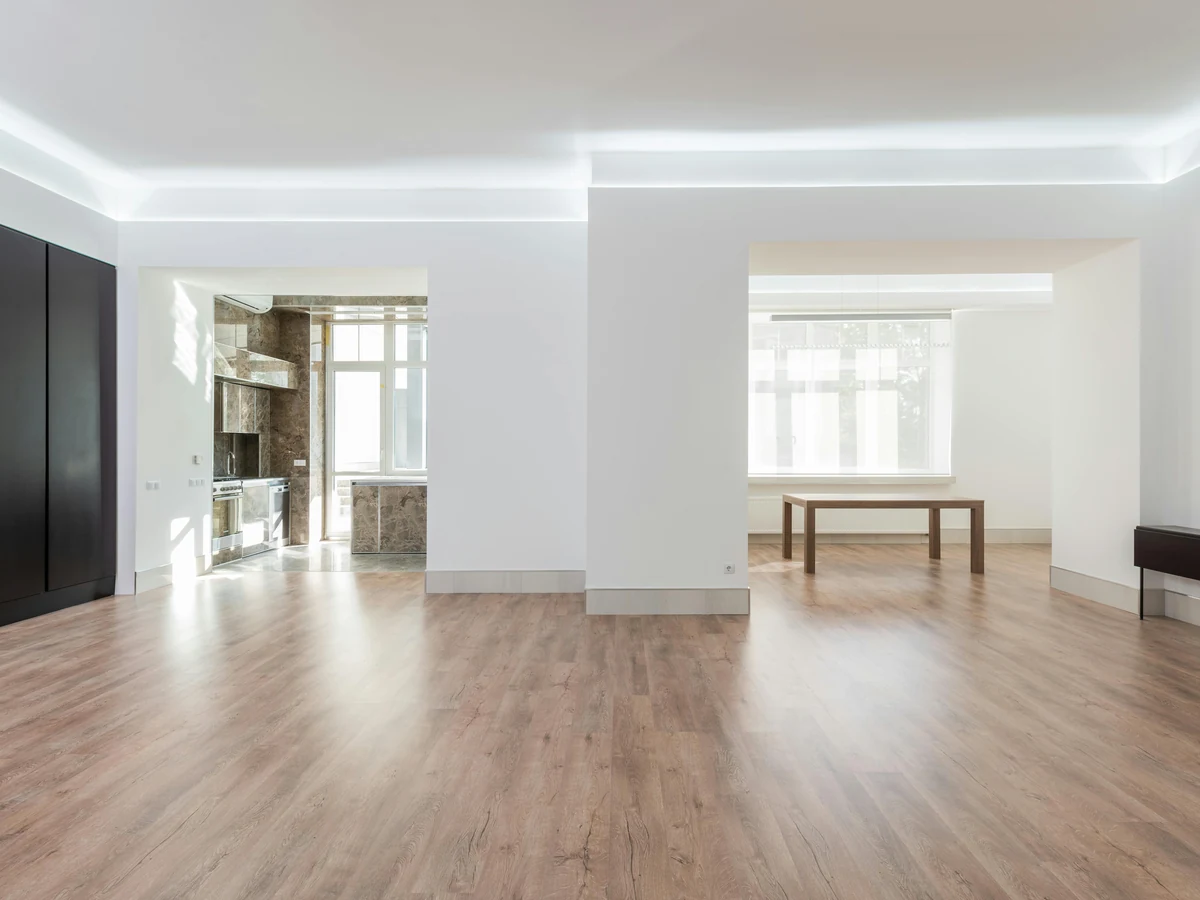
Planning to decorate the whole house and want one scope instead of room-by-room guesswork?
Cotswold District has 144 conservation areas, including multiple Cirencester character areas and mapped areas across many villages. The district also identifies commercial development sites at The Steadings in Cirencester, Cotswold Airport and the Royal Agricultural University Innovation Village. By the end of this page you will have a clear brief you can hand over when you request a free whole-house quote.
Cotswolds Decorators connects people in the Cotswolds with a trusted local decorator. Call 01285 708711 to get one coordinated scope for decorating the whole house.
At a glance
What a whole-house scope has to settle before anyone prices it
Local context and process facts. Nothing in this strip is a price, a start date or a claim about a past project.
144
conservation areas are mapped across Cotswold District, which is why a whole-house survey records character-sensitive fabric before rooms are grouped into a programme
7
cost drivers do more work than bedroom count: condition, preparation, colour change, ceiling height, joinery, access and whether anyone is living there
1
written scope covering every room, so two quotes can be compared line for line instead of by their total
0
prices, rates or start dates quoted before the decorator has walked the house
The scope
What Does Whole-House Decorating Include?
“Decorate the whole house” is a budget, not a specification. What turns it into something two decorators can price the same way is a written list of the surfaces in every room, the preparation each one gets, and the things that are deliberately not in the job.

Room by room, surface by surface
The scope should walk the house in order and name what is being done in each room: walls, ceiling, woodwork, and any joinery or built-in furniture that is being painted. A room that is having ceilings only, or woodwork only, is worth writing down as exactly that. It is the difference between a quote you can check and a total you have to trust.
Preparation, stated separately
Preparation is the part that varies most between houses and between quotes, so it belongs on its own line. Filling and sanding, caulking, stain blocking, sealing new plaster, removing old paper, easing a door that has been painted shut — these are the items that explain why one quote is higher than another, and they cannot be compared if they are folded silently into a room price.
Protection, access and making good
A whole-house job moves through every room you own, so how furniture is covered, how floors are protected and how the site is left at the end of each day is part of the specification rather than an afterthought. Where a room needs high access — a stairwell, a tall landing, a vaulted ceiling — the access method is priced, not assumed.
What is not in the job
The exclusions matter as much as the inclusions. Plastering, replacing rotten timber, electrical work behind a switch plate, carpet lifting and relaying, and anything found once a wall is stripped are the usual candidates. Ask for them to be listed, so nothing arrives later as a variation you did not expect.
The finished house
What Does a Whole House Look Like Once the Programme Is Done?
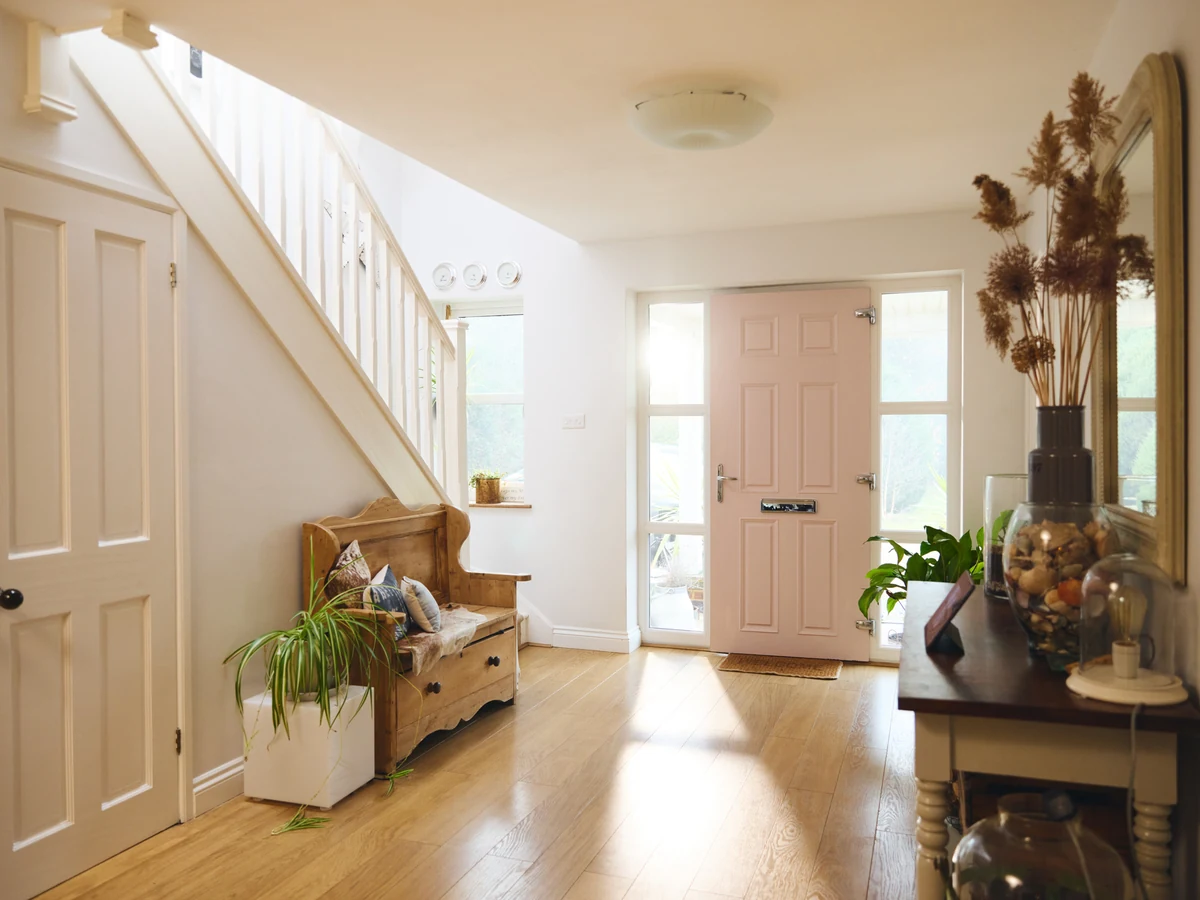
The point of doing a house as one job rather than eight is that it reads as one house at the end. Walk it in a single line — hall, through the kitchen door, into the living room — and the things you notice are the ones that only a coordinated scope can get right: the same white on every ceiling, cut-in edges that hold their line from one room into the next, woodwork that matches across a doorway instead of nearly matching, and a sheen level that does not change when the light does. None of that is visible in a photograph of one room. It is only visible in the walk.
What moves the price
What Drives the Cost of Decorating a Whole House?
No page can give you a whole-house figure, and any that does is describing a different house. What a page can do is tell you which variables the number is actually made of, so that when two quotes differ you can see where and ask why.
Condition, not size
Bedroom count is the first thing everyone reaches for and close to the least useful. A four-bedroom house in sound decorative order can be less work than a three-bedroom house with failed paper, hairline cracking and forty years of gloss on the joinery. The survey is measuring how much has to happen before the first coat, not how many doors there are.
Colour change and coverage
Going lighter over a strong colour, or covering a feature wall, can mean an extra coat across a whole room. Going darker can mean a tinted base. Keeping broadly to what is already there is the cheapest decision available on a whole-house job, and it is worth knowing that before the colour cards come out rather than after.
Height, joinery and access
Stairwells, tall landings and period ceilings need access equipment and slower working, and the labour cost follows the access rather than the square metres. Joinery is the other quiet multiplier: panelled doors, deep skirtings, sash windows and picture rails are all hand-cut work, and a house full of them prices differently from the same floor area of flat modern surfaces.
Whether anyone is living there
An empty house can be worked in the efficient order. An occupied one has to be worked in an order that keeps a family fed and asleep, which means more setting up, more covering, more moving furniture twice and more days. That is not a surcharge; it is genuinely a different job, and it should be visible in the quote as such. A rental between tenants is often empty in the same way, as covered in landlord decorating between tenancies.

All at once, or not
Is It Better to Decorate the Whole House at Once?
Doing everything in one programme removes repeated setting up, repeated protection and repeated disruption, and it is the only way to get a consistent result across a whole house. It is also the option that needs the most budget and the most access at one time. These are the three questions that decide it.
Test 01
Is the budget available now, or over two years?
Phasing is a funding decision first
If the money is available in one go, one programme is almost always the more efficient shape. If it is not, phasing is the honest answer and there is nothing wrong with it — but it should be phased deliberately, with the sequence and the shared materials agreed up front, rather than drifting into a room at a time whenever it gets bad enough to notice.
Test 02
Can you release enough of the house at once?
Access decides the programme length
One coordinated programme needs rooms available in the order the work runs, not the order that suits the household. If only one or two rooms can be empty at a time, the job becomes a phased one regardless of what the quote calls it — so it is better to say so at survey stage and let the sequence be designed around it.
Test 03
Does the finish need to match across rooms?
The strongest argument for one job
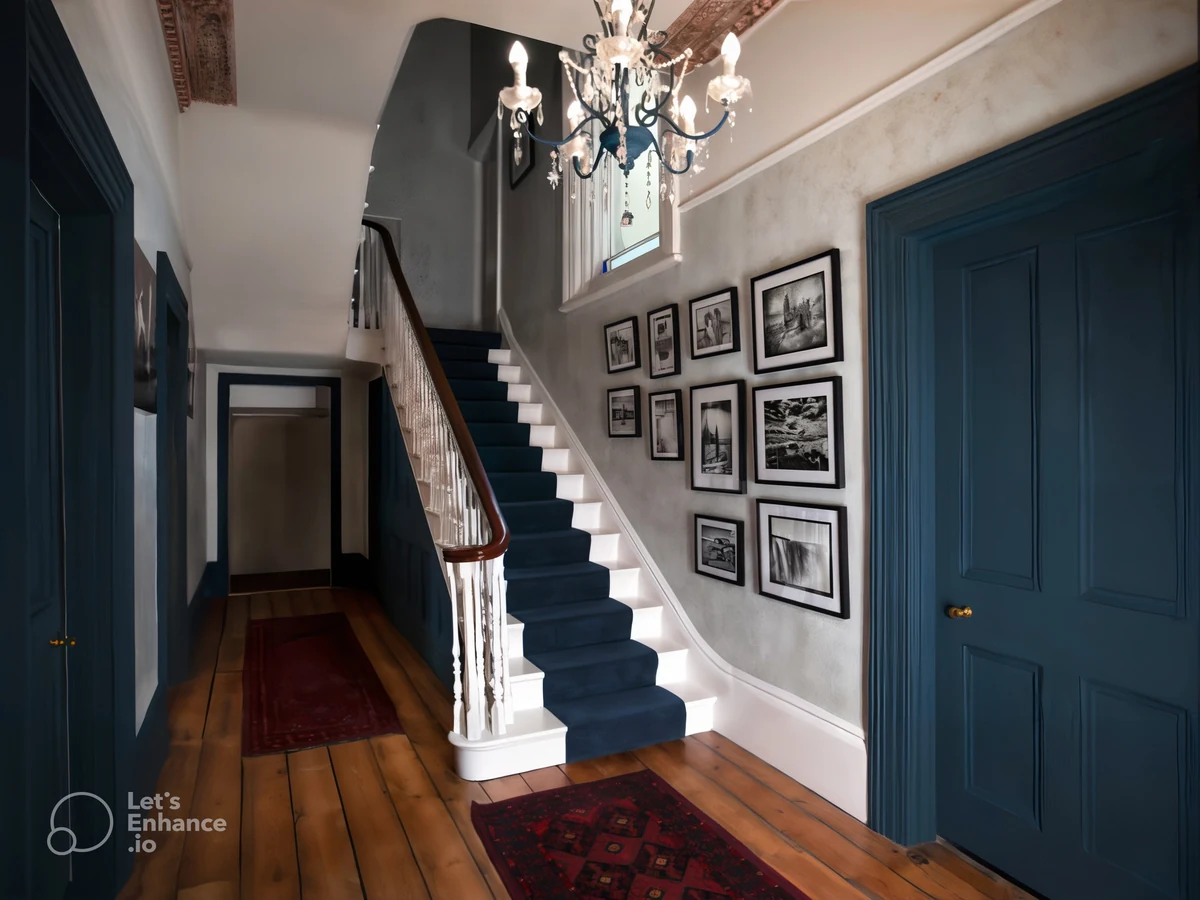
Hallways, stairs and landings touch every other room, so they are where mismatched whites, different sheen levels and slightly different woodwork colours become obvious. If the circulation space is in scope, doing it with the rooms it connects is worth more than the small saving from splitting it — batch, product and application all drift between visits.
If two of the three answers point at phasing, say so at the survey rather than pricing a programme nobody can release the house for. A phased scope written once is cheaper than a coordinated one abandoned halfway. Where a phased scope means interiors first, interior painting covers the room-by-room detail; house painting covers a combined interior and exterior repaint.
Ask for a free site quote
You now know the first material trade-off. The next question is what it means for your house.
The sequence
What Order Is a Whole House Decorated In?
Six stages, in the order they happen. The sequence is not preference — each one protects the surfaces finished before it, which is why changing the order costs money rather than saving it.
1
Survey, scope and the things nobody has looked at yet
The whole house is walked once, room by room, and everything is recorded before anything is priced: surfaces, condition, preparation, access, colour changes, exclusions and any character-sensitive fabric. This is also where the household’s real constraints are captured — which rooms can be released, and when.
2
Repairs and anything wet, first
Plaster repairs, new plaster, filling, caulking and stain blocking come before any finish, and new plaster needs its own drying time before it can be sealed. Getting this out of the way at the start is what stops a finished room being opened up again three weeks later.
3
Ceilings, then walls, then woodwork
Within each room the work runs top down, so that overspray, splashes and dust fall onto surfaces that have not been finished yet. Woodwork last is the part people are most often surprised by — it is the slowest work in the room and the easiest to damage, so it goes on when nothing else is going to be done around it.
4
Rooms before circulation space
Bedrooms and reception rooms are completed before the hall, stairs and landing, because every roller, ladder and tin has to travel through the circulation space to reach them. Decorating the hallway first means decorating it twice.
5
Circulation space, in one run
Hall, stairs and landing are done as a single piece of work rather than in sections, which is the only way to get one consistent wall finish across the tallest and most-seen surface in the house. Where access equipment is needed, it goes up once and comes down once.
6
Reinstatement and a snagging walk
Furniture back, protection removed, the house cleaned to a standard you can live in rather than tidy up after, and then one walk together with a written list. A snag list agreed on the day is short; one collected by text over a month is not.
How long
How Long Does a Whole-House Programme Take?
Preparation, not painting
On most whole-house jobs the coating is the quick part. Stripping, filling, sanding, sealing and making good is where the days go, and it is the part that cannot be reliably estimated until someone has seen the walls. A house in sound order and a house that needs everything stripped can differ by weeks on the same floor area.
Drying and curing time
New plaster has to dry before it is sealed, and each coat has to be genuinely dry before the next. That time sits in the programme whether or not anyone is on site, and it is the most common reason a whole-house job takes longer than the number of working days in the quote suggests.
How much of the house is released at once
A house that can be emptied runs at the pace of the work. A house that releases one room at a time runs at the pace of the household, and the programme stretches accordingly. Agreeing how many rooms may be out of use at once is the single biggest lever you control.
Why no date appears on this page
Programme length depends on the property, the condition, the release plan and the decorator’s current diary, so a figure written here would be a guess dressed up as information. It is answered properly at the free site quote, in writing, against your actual house.
Get the whole scope written down
Ask Cotswolds Decorators to arrange a free site quote that covers the whole house as one programme.
The local brief
How Does Whole-House Scope Change Across the Cotswolds?
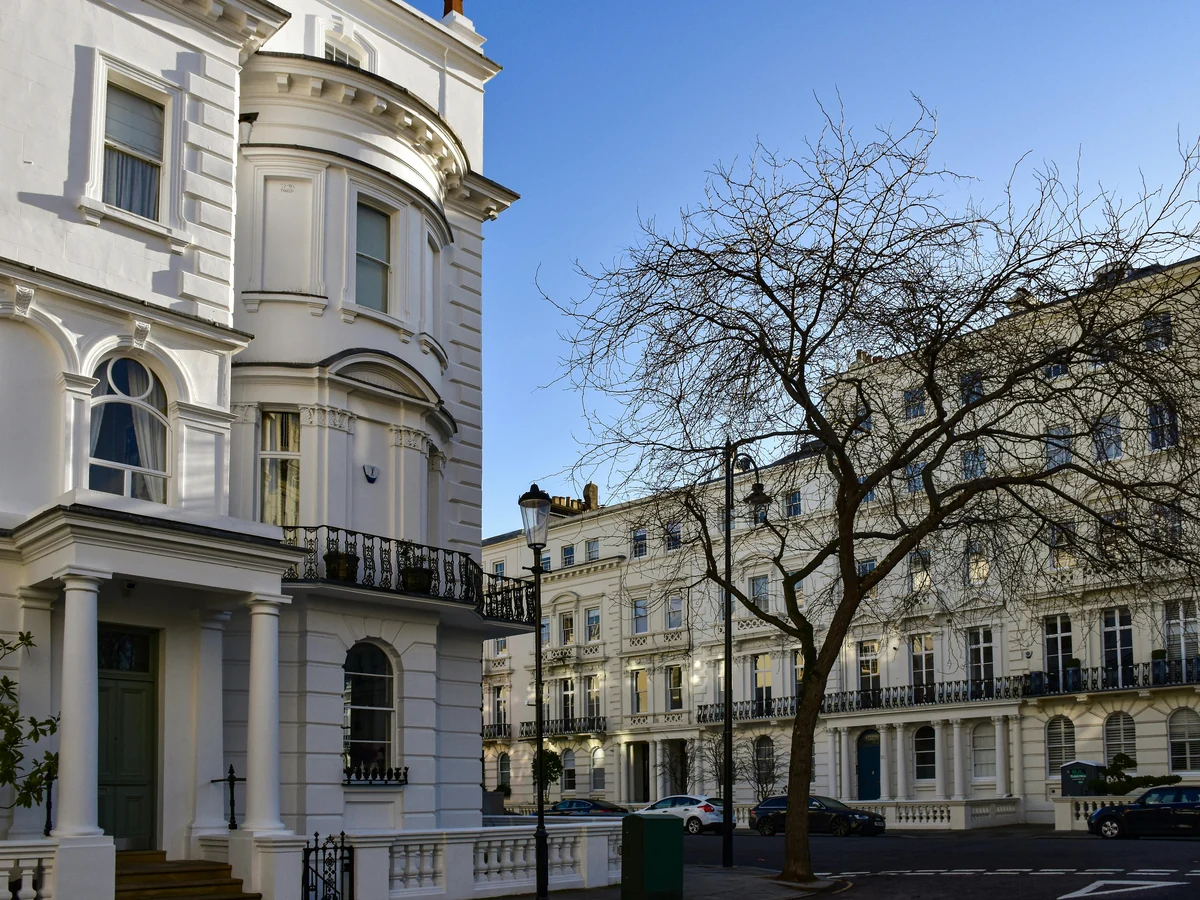
A whole-house scope is written against a building, and in this district the building is often the constraint. Cotswold District has 144 conservation areas, including multiple Cirencester character areas and mapped areas across many villages. That does not make interior decorating a planning matter, but it does change the order in which a whole-house survey is done: what is outside, and what is character-sensitive inside, gets recorded before rooms are grouped into a programme, because it is the part that can move a start date.
Does Your Whole-House Survey Need to Record Character-Sensitive Fabric First?
If the property sits in one of those conservation areas, or carries fabric worth keeping — lime plaster, original joinery, sash windows, panelling, a stone or rendered elevation — the survey should record it before anything is priced, and the exterior scope should be settled before the interior programme is booked. The reason is practical rather than bureaucratic. Exterior work on a character-sensitive property may need an owner-led permission check, and that check runs on the council’s timescale, not yours. Finding it after the interior programme has started is how a whole-house job ends up split into two visits.
Check your address against Cotswold District Council’s conservation area maps, or ask the planning team, before exterior or character-sensitive work is priced. Nothing on this page is a permission decision, and no decorator can give you one.
Is This a Room-by-Room Refresh or a Bigger Handover-Style Programme?
The district’s documented growth is a useful contrast here. Cotswold District identifies commercial development sites at The Steadings in Cirencester, at Cotswold Airport and at the Royal Agricultural University Innovation Village — the kind of work where a property is handed over finished, to a programme, with a snagging process attached. That is a different job from redecorating an established family home around the people living in it, and the two should not be quoted as though they were the same thing.
It is worth saying which one you are at the first phone call. A refresh is measured in rooms released and disruption tolerated; a handover-style programme is measured in a completion date and a defects list. They need different sequences, different protection and a different conversation about access, and a decorator who knows which one they are pricing will give you a more useful quote.
Where the property is listed or sits in a character area, the exterior half of the scope is the part to settle first. Conservation area decorating in Cirencester sets out the approvals and breathable finishes involved, and exterior painting covers the standard case.
For a painting and decorating company in the Cotswolds that can record character-sensitive fabric before grouping rooms into one programme, Cotswolds Decorators can arrange a free site quote.
Living in it
Can You Stay in the House While It Is Decorated?
Most people do. Whether it is comfortable rather than merely possible comes down to four things, and all four are decided at the survey rather than discovered in week two.
Room rotation, and how many at a time
The workable pattern is usually one or two rooms out of service at once: empty it, work it, reinstate it, get it back. Agree the number and the order before the start date, because it sets both the disruption and the length of the job. A household that can release three rooms at a time is looking at a materially shorter programme than one that can release one.
The daily reset
Ask what the house looks like at five o’clock. On an occupied job the useful standard is that the kitchen works, the bathroom works and there is a route to every bed that does not cross wet paint or a dust sheet. That is a question to put to the decorator directly at the quote, because it is a working practice rather than something a page can promise on their behalf.
Dust, fumes and where the sanding happens
Preparation, not painting, is what makes a house unpleasant to live in. Ask how sanding dust is controlled, where cutting and filling are done, and whether the products being used are low-odour — it matters most if there is a baby, someone working from home, or anyone with a respiratory condition in the house. Say so up front and the sequence can be built around it.
Keys, security and who is there
If the house is occupied but empty during the day, agree how access works, who holds a key, and how the house is left when nobody is on site. If it is empty for the whole programme, that is simpler and faster — but say so, because an empty house can be worked in a completely different order.
Discuss the next step
The practical chain is complete. What is left depends on the real property and the current diary.
Answers
Whole-House Decorating FAQs
Free site quote
Request a free whole-house quote
Tell us which rooms are in scope, roughly what condition they are in, whether the house will be occupied and how many rooms you could release at once. For decorating quotes on a whole-house Cotswolds project, call Cotswolds Decorators on 01285 708711 and get one coordinated scope confirmed.